
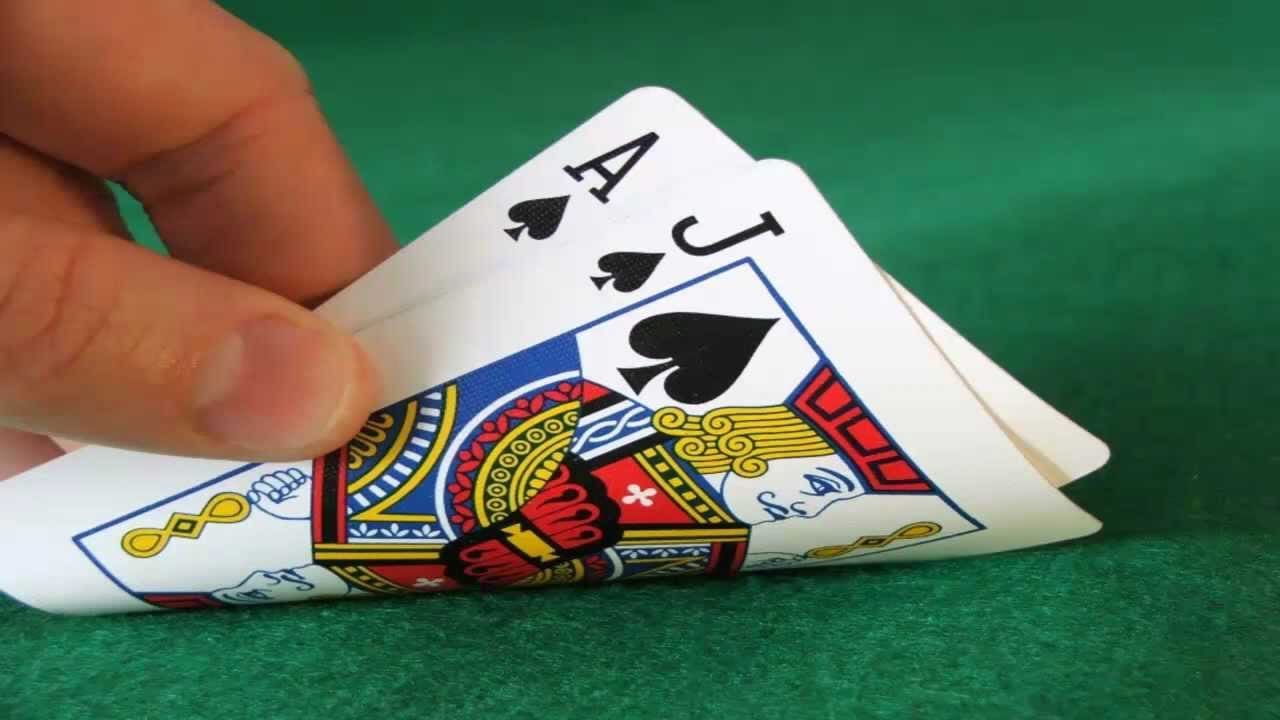
Blackjack is one of the most popular card games in casinos worldwide. Also known as 21, the game combines simple rules, quick decisions, and an element of strategy that makes it appealing to both beginners and experienced players.
Unlike many casino games that rely entirely on chance, blackjack allows players to make decisions that influence their chances of winning. Knowing when to hit, stand, double down, or split can make a meaningful difference in the game’s mathematical outcomes.
However, blackjack still involves risk, and no strategy guarantees success. Understanding the rules, card values, and common mistakes is essential before playing.
In this complete blackjack guide, we explain how the game works, the different actions available, popular blackjack variations, and the basic strategies that beginners should know.
What Is Blackjack?
Blackjack is a casino card game in which players compete against the dealer rather than against one another.
The main objective is to finish with a hand value closer to 21 than the dealer’s hand without exceeding 21.
If a player’s hand exceeds 21, it is called a bust, and the player immediately loses the wager. If the dealer busts while the player remains at 21 or below, the player wins.
A hand containing an Ace and a ten-value card as the first two cards is called a natural blackjack. It typically receives a special payout, depending on the table rules.
Blackjack is popular because players can learn its basic rules relatively quickly while developing a deeper understanding of strategy over time.
Blackjack Card Values Explained
Before learning how to play blackjack, players need to understand how cards are counted.
The scoring system is straightforward:
-
Number cards (2–10): Worth their face value.
-
Jack, Queen, and King: Each worth 10 points.
-
Ace: Worth either 1 or 11 points, depending on which value benefits the hand without causing a bust.
For example, a hand containing a 7 and a King has a total of 17 points.
An Ace and a 6 can count as either 7 or 17. If another card would cause the hand to exceed 21 when the Ace counts as 11, the Ace can instead count as 1.
This flexibility makes the Ace one of the most important cards in blackjack.
Hard Hands and Soft Hands
Blackjack hands are commonly divided into two categories.
A hard hand either contains no Ace or has an Ace that must count as 1 to avoid exceeding 21.
A soft hand contains an Ace that can count as 11 without causing a bust.
For example:
-
Ace + 6 = Soft 17
-
10 + 7 = Hard 17
-
Ace + 6 + 10 = Hard 17
Understanding the difference between hard and soft hands is important because optimal playing decisions can vary.
How to Play Blackjack Step by Step
A typical blackjack round follows a series of actions.
Step 1: Place a Bet
Before the cards are dealt, each player places a wager within the table’s minimum and maximum betting limits.
The amount of the wager determines the potential payout if the player wins.
Step 2: Receive the Initial Cards
The dealer distributes two cards to each player and two cards to the dealer.
In many blackjack variations, one dealer card is visible while the other is face down. Some versions use different dealing procedures.
Players can examine their own cards and compare their hand values with the dealer’s visible card.
Step 3: Choose an Action
Players decide how to proceed based on their cards and the dealer’s upcard.
Depending on the rules, they may hit, stand, double down, split, or surrender.
Step 4: Dealer Plays the Hand
After all players have completed their decisions, the dealer plays according to predetermined rules.
Most blackjack games require the dealer to draw cards until reaching at least 17, although rules differ regarding soft 17.
Step 5: Determine the Winner
The final hand values are compared.
A player wins when their valid hand is higher than the dealer’s, or when the dealer busts.
If both hands have the same total, the result is usually a push, meaning the original wager is returned.
Main Blackjack Actions and Their Meanings
One of the most important parts of learning blackjack is understanding the available actions.
Hit
A hit means requesting another card from the dealer.
Players usually choose this action when they believe their current hand needs improvement.
For example, a player holding a total of 11 may request another card because drawing any single card cannot cause that hand to bust.
However, hitting with a higher total can be risky because receiving a high-value card may push the hand above 21.
Stand
Standing means keeping the current hand without receiving additional cards.
This action ends the player’s turn for that hand.
A player with a strong total may choose to stand rather than risk drawing another card.
Double Down
Doubling down allows a player to increase the original wager, usually by an amount equal to the initial bet, in exchange for receiving exactly one additional card.
After receiving that card, the player must stand.
Doubling down can be advantageous in certain situations, but it also increases the amount at risk.
Split
When the first two cards have the same rank, players may be allowed to split them into two separate hands.
Each new hand requires an additional wager, typically equal to the original bet.
For example, a player receiving two 8s can often split them and play each 8 as the starting card of a new hand.
Special restrictions may apply to splitting Aces or splitting a hand more than once.
Surrender
Some blackjack tables offer a surrender option, allowing players to give up a hand and recover half of the original wager.
This action is not available in every blackjack variation.
Whether surrender is useful depends on the player’s cards, the dealer’s upcard, and the specific rules.
What Is a Natural Blackjack?
A natural blackjack occurs when a player’s first two cards consist of an Ace and a card worth 10 points.
This produces a total of 21 immediately.
At many traditional blackjack tables, a natural blackjack pays 3 to 2. For example, a winning $20 wager would earn $30 in profit, in addition to the return of the original stake.
However, some tables pay 6 to 5 or use other payout structures.
The difference is important because a 6-to-5 payout is less favorable to the player than a 3-to-2 payout.
A natural blackjack also normally beats a regular three-card or multi-card total of 21. If both the dealer and player have a natural blackjack, the result is usually a push.
Players should check the payout rules before joining a game.
Basic Blackjack Strategy for Beginners
Basic blackjack strategy is a mathematically developed set of decisions based on the player’s hand and the dealer’s visible card.
Its purpose is to minimize the house edge under a particular set of rules.
Although exact strategy varies between blackjack versions, several general principles are useful for understanding the game.
Learn When to Stand
Standing is often appropriate when the player has a strong total and drawing another card creates unnecessary risk.
However, the dealer’s visible card matters. The best decision for a hand of 16, for example, can differ depending on whether the dealer shows a 6 or a 10.
Understand When to Hit
Players with lower totals often need additional cards to compete with the dealer.
Hitting is not simply about reaching 21. It involves balancing the possibility of improving the hand against the risk of busting.
Know When to Double Down
Doubling down can be mathematically favorable in certain situations, particularly when the player’s total and the dealer’s upcard create an advantageous opportunity.
Because it increases the wager, players should understand the correct conditions rather than doubling impulsively.
Learn Pair-Splitting Rules
Splitting can transform one difficult hand into two separate hands.
A commonly taught principle is to split Aces and 8s under many standard rule sets.
However, other pairs require different decisions depending on the dealer’s upcard and the table rules.
Use a Basic Strategy Chart
A blackjack basic strategy chart provides recommended actions for different combinations of player hands and dealer upcards.
For the most accurate guidance, players should use a chart that matches the exact game rules, including the number of decks, dealer behavior on soft 17, and available doubling options.
Following basic strategy does not guarantee winning, but it can reduce avoidable mathematical disadvantages.
Blackjack House Edge and Winning Probability
The house edge represents the casino’s mathematical advantage over players over a large number of rounds.
Blackjack can have a relatively low house edge when favorable rules are used and players follow the correct basic strategy.
In some common blackjack configurations, the house edge can be around 0.5% or lower with optimal basic strategy. Other rule sets may produce a significantly higher advantage for the casino .
Several factors influence the house edge, including:
-
Number of decks used.
-
Whether the dealer hits or stands on soft 17.
-
Blackjack payout ratios.
-
Rules for doubling down.
-
Restrictions on splitting.
-
Availability of surrender.
A low house edge does not mean that a player will lose only a small percentage during a short session. Individual results can vary considerably.
Popular Blackjack Variations
Blackjack is available in several formats, each with its own rules.
Classic Blackjack
Classic blackjack generally follows traditional rules in which players try to beat the dealer without exceeding 21.
It is a useful starting point for beginners because it introduces the standard actions and scoring system.
European Blackjack
European blackjack commonly uses two decks, although rules vary by operator.
In some versions, the dealer initially receives only one card and takes the second card later.
This difference can affect the consequences of doubling or splitting when the dealer ultimately has blackjack.
American Blackjack
American blackjack commonly uses a dealer hole card and may include a check for dealer blackjack when the visible card is an Ace or a ten-value card.
The exact procedure depends on the casino and the game variant.
Spanish 21
Spanish 21 uses a modified deck without the four ten-spot cards, while retaining face cards.
It often includes special player-friendly rules and bonus payouts, but removing the ten-spot cards also changes the underlying probabilities.
Players should not assume that standard blackjack strategy applies directly to Spanish 21.
Live Dealer Blackjack
Live dealer blackjack allows online participants to watch a real dealer distribute physical cards through a video stream.
The gameplay can resemble a traditional casino experience, although betting limits, interface features, and specific rules may differ.
Common Blackjack Mistakes to Avoid
Beginners sometimes make decisions based on intuition rather than understanding the rules.
One common mistake is assuming that the objective is always to reach exactly 21. In reality, the goal is to beat the dealer without busting.
Another mistake is ignoring the dealer’s visible card. This card provides important information for choosing an appropriate action.
Players may also lose money by taking insurance bets without understanding their mathematical value. Insurance is a separate wager offered when the dealer shows an Ace, and it generally has an unfavorable expected return for players who are not tracking the composition of the remaining cards.
Other common errors include using the wrong basic strategy chart, overlooking unfavorable blackjack payouts, and increasing wagers in an attempt to recover previous losses.
Avoiding these mistakes can improve a player’s understanding of the game, although it cannot eliminate risk.
Is Card Counting Legal in Blackjack?
Card counting is a method of tracking the relative concentration of high-value and low-value cards remaining in a deck or shoe.
In some circumstances, it can help skilled players estimate when the remaining cards are more favorable.
Mental card counting is generally not a criminal offense by itself in many jurisdictions, but casino rules and local laws vary. Casinos may refuse service or restrict players they believe are using advantage-play techniques.
Using electronic devices or prohibited assistance can raise separate legal and regulatory issues.
Card counting is also more difficult than it may appear. It requires practice, discipline, and an understanding of the specific rules and conditions.
Online Blackjack vs. Land-Based Blackjack
Online blackjack and traditional casino blackjack share the same basic objective, but the playing experience can differ.
Online blackjack is available in digital formats and through live dealer games. Depending on the platform, players may encounter different table limits, game variations, and interface features.
Land-based blackjack takes place at a physical table where participants interact directly with the dealer.
In both formats, players should check the rules, payout structure, and available actions before placing a wager.
Online gambling regulations differ by location, so players should verify local laws and use appropriately licensed platforms where participation is permitted.
Responsible Blackjack Play
Blackjack involves financial risk, regardless of the player’s experience or understanding of strategy.
A practical approach is to establish a spending limit before playing and avoid wagering money needed for essential expenses.
Players should also avoid chasing losses, relying on gambling as a source of income, or assuming that a winning streak will continue.
Taking breaks and setting time limits can help maintain perspective.
Basic strategy can improve decision-making, but it cannot guarantee a profit. The outcome of any individual hand remains uncertain.
Frequently Asked Questions About Blackjack
Is blackjack easy to learn?
Yes. The basic rules and card values are relatively straightforward. However, learning optimal strategy for different situations requires additional study and practice.
What happens if both the player and dealer have 21?
If both have the same type of hand, the result is generally a push. However, a natural blackjack normally beats a regular 21 made with three or more cards.
Should beginners always stand on 17?
The correct decision depends on whether the hand is hard or soft, the dealer’s upcard, and the table rules. Hard 17 is generally a standing hand under standard basic strategy, while soft 17 may require a different action.
Is blackjack based on luck or skill?
Blackjack involves both chance and decision-making. Players cannot control the cards they receive, but their decisions can affect the mathematical expectation of a hand.
Can blackjack strategy guarantee a win?
No. Basic strategy can reduce the house edge under appropriate rules, but it cannot guarantee winning hands or profitable sessions.
Conclusion
Blackjack is a widely played casino card game that combines simple scoring with meaningful decisions. Its popularity comes from the balance between chance and strategy, as players attempt to finish closer to 21 than the dealer without exceeding that total.
For beginners, learning card values, understanding the differences between hitting and standing, and becoming familiar with doubling and splitting are important first steps.
A basic strategy chart can help players make mathematically informed decisions, while checking the table rules can reveal important differences between blackjack variations.
Despite its strategic elements, blackjack remains a gambling game with financial risks. Players should approach it with realistic expectations, clear spending limits, and an understanding that no method guarantees success.